

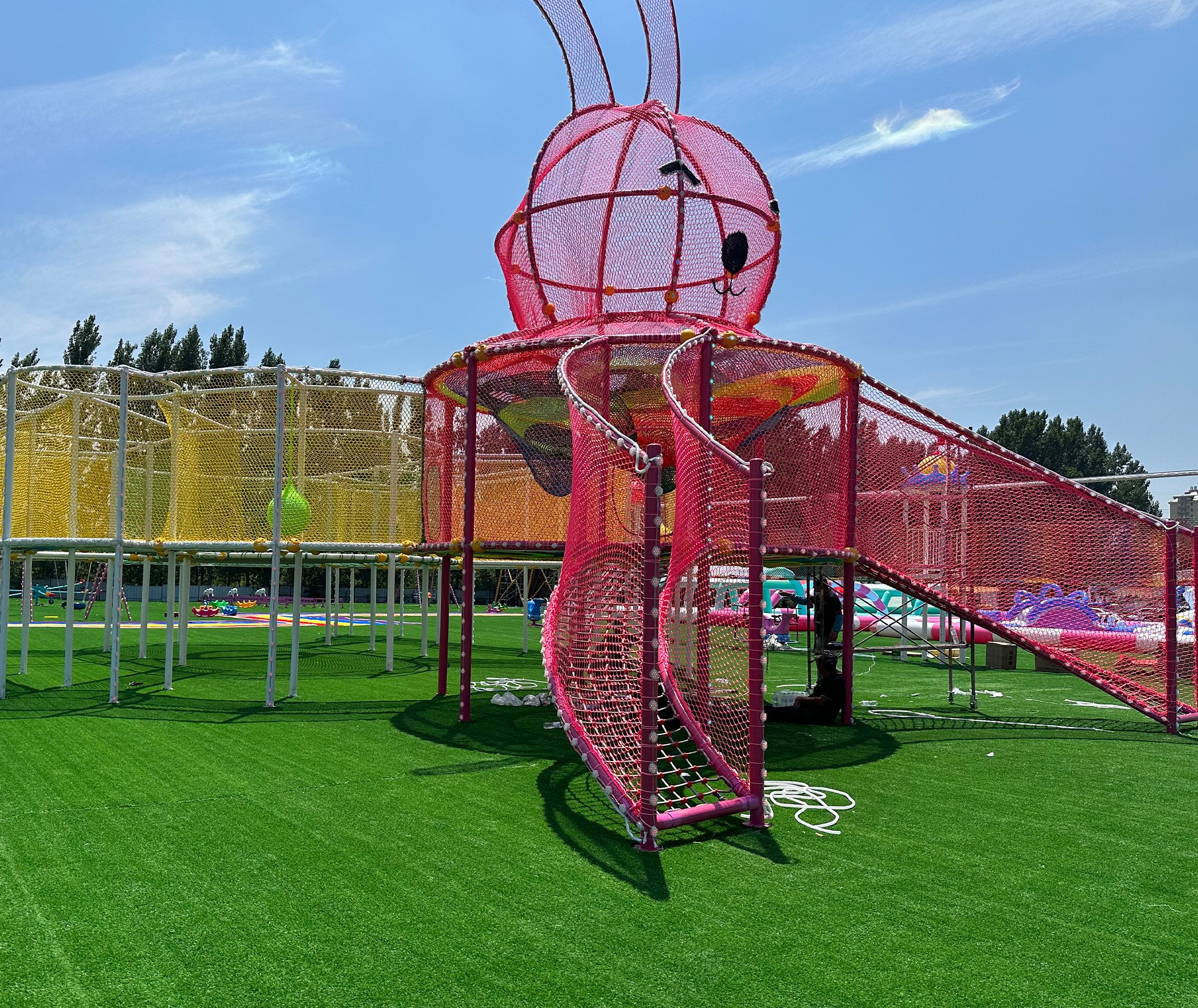
Indoor climbing wall supports are the structural backbone of every artificial climbing wall, whether it is inside a large commercial climbing gym, a school sports hall, an adventure park, or a small home training space.
Well-designed support systems ensure that indoor climbing walls are safe, durable, and versatile enough to serve both high-performance skill training and casual entertainment.
This guide explains the fundamental concepts, common configurations, technical specifications, and design considerations for indoor climbing wall supports for skill training and entertainment.
It is written in clear English, optimized for search engines, and suitable as reference content for blogs, industry pages, category pages, or educational resources.
Indoor climbing wall supports are the structural elements that carry the loads from the climbing panels, climbers, and safety systems and transfer them to the building structure or a freestanding frame.
They form the hidden framework behind the visible climbing surface.
In the context of indoor climbing wall supports for skill training and entertainment, the term usually includes:
The design, material selection, and layout of indoor climbing wall supports directly influence wall height, angle options, load capacity, safety performance, and long-term maintenance needs.
Indoor climbing wall supports are used across a broad spectrum of facilities, but the two dominant use cases are:
Training walls emphasize performance, technique development, and progression.
Indoor climbing wall supports in training facilities must accommodate:
Because loads are higher and usage is intensive, training-oriented indoor climbing wall supports are usually steel-framed, heavily braced, and designed with higher safety factors.
Entertainment-focused walls are designed to be approachable, visually attractive, and fun for a wide audience.
Typical facilities include family entertainment centers, trampoline parks, shopping mall attractions, and indoor playgrounds.
For these venues, indoor climbing wall supports generally:
Despite the playful look, the hidden support structure must still meet strict safety standards and be engineered for dynamic loads from children and adults.
Indoor climbing walls for skill training and entertainment use a variety of support configurations.
The optimal solution depends on building constraints, budget, and intended user group.
Building-attached indoor climbing wall supports use existing structural elements such as concrete walls, steel columns, or slabs as the primary load path.
This configuration is common in:
The main limitation is that wall angle and height are often constrained by the existing building geometry and anchoring capacity.
Freestanding indoor climbing wall supports are self-supporting steel or timber frames that do not rely on the building walls for structural strength.
They stand on their own base or footings and can be placed inside large halls, warehouses, or open spaces.
Typical forms include:
Freestanding supports are ideal for:
They usually require more material and engineering but provide maximum flexibility in wall layout.
Many modern climbing facilities use hybrid support systems that combine building-attached and freestanding elements or employ modular support frames that can be expanded over time.
Characteristics of hybrid and modular supports:
This approach is well-suited to facilities that expect changing user demands, evolving training methods, or future expansions.
Indoor climbing wall supports for skill training and entertainment can be tailored to many different layouts.
Below are the most typical configurations.
Tall climbing walls with ropes for belaying require support structures capable of handling large fall forces and long vertical spans.
Bouldering walls are shorter, without ropes, and rely on thick matting for fall protection.
Support structures can be lighter but must withstand frequent dynamic moves and impact loads.
Support structures for kids' climbing walls prioritize safety, gentle heights, and playful shapes.
For home users, indoor climbing wall supports tend to be compact and cost-effective.
The choice of materials for indoor climbing wall supports affects cost, durability,fire performance, and the range of possible wall geometries.
Structural steel is the most common material for commercial indoor climbing wall support frames.
Timber is frequently used in smaller or home installations and in some bouldering walls.
Hybrid systems combine steel and timber to harness the benefits of both, especially in cost-sensitive or retrofit projects.
Climbing panels are not part of the structural support frame, but the interface between panels and supports is critical for overall performance.
Indoor climbing wall supports must be engineered according to applicable structural design codes and specific climbing wall standards.
Several key factors guide the design process.
Typical load categories considered in the engineering of indoor climbing wall supports include:
Safety factors are applied to ensure that indoor climbing wall supports remain far from failure under extreme loads.
Designers typically use:
When indoor climbing wall supports connect to existing building elements:
The following tables present example ranges and typical specification data for indoor climbing wall supports for skill training and entertainment.
These values are indicative and must always be verified by qualified engineers for specific projects.
| Parameter | Training-Focused Walls | Entertainment-Focused Walls | Home Training Walls |
|---|---|---|---|
| Typical height | 10–18 m (top-rope/lead) | 4–12 m (auto-belay and fun walls) | 2.5–4 m (bouldering/training) |
| Typical width per wall segment | 3–15 m | 2–6 m | 1.2–3.6 m |
| Wall angle range | -10° slab to +60° overhang | -5° to +30° commonly | Vertical to +45° |
| Panel thickness (plywood) | 18–21 mm | 16–18 mm | 18 mm typical |
| Support member spacing | 600–1200 mm | 600–1000 mm | 400–600 mm (timber) |
| Application | Common Steel Section Types | Typical Section Size Range | Notes |
|---|---|---|---|
| Main vertical columns | H-beam / I-beam / SHS | HEA/HEB 160–260 or SHS 100–200 mm | Depends on wall height and load |
| Primary beams / rafters | IPE / RHS / SHS | IPE 140–220 or RHS 80–200 mm | Supports main panel grids and overhangs |
| Secondary members (studs, rails) | Angle, channel, light SHS | 40–100 mm | Carry panel loads to primary frame |
| Bracing elements | Angle, rod, cable | Ø8–20 mm rods or small angles | Control lateral deflection and sway |
| Parameter | Typical Target Value or Range | Relevance |
|---|---|---|
| Maximum allowable deflection at top of wall | L/200 to L/300 (project-specific) | Perceived stiffness and comfort |
| Design load for top anchors | Commonly 10–15 kN or more per anchor | Safety during falls and rescues |
| Live load on panels (climber + gear) | Approx. 1.5–2.5 kN per critical point | Point load resistance for holds and bolts |
| Dynamic amplification factor | 1.4–2.0 depending on design approach | Accounts for fall and impact effects |
Indoor climbing wall supports for skill training and entertainment must comply with local building codes and any climbing-specific standards or guidelines.
While exact regulations vary by country, several common themes appear worldwide.
The construction of indoor climbing wall supports follows a structured process that ensures alignment, stability, and safety.
Even robust indoor climbing wall supports need regular inspection and maintenance to ensure long-term safety and optimal performance.
When the primary goal is skill training for climbers, the support design emphasizes performance, variability, and durability.
Some training-focused facilities use adjustable walls:
For adjustable systems, the indoor climbing wall supports are designed for repeated movement, locking mechanisms, and additional safety redundancy.
Entertainment-oriented climbing structures focus on visual impact, accessibility, and easy operation.
Support systems in these facilities are often modular, colorful, and integrated with attractions.
Many entertainment facilities rely on auto-belays instead of manual belaying:
| Support Approach | Main Advantages | Main Limitations | Typical Use |
|---|---|---|---|
| Building-attached steel frame | Efficient use of existing structure, reduced material for supports, cost-effective where walls are strong | Dependent on wall capacity, limited angle flexibility, more coordination with building engineer | Gyms in concrete or masonry halls, schools, universities |
| Freestanding steel frame | Maximal freedom in wall geometry, minimal reliance on building, easy expansion | More steel required, higher cost, larger footprint | New-build climbing gyms, entertainment centers, large halls |
| Timber-based support | Lower material cost, easier DIY, warm appearance | Limited height and overhang potential, more sensitive to moisture and fire | Home walls, small bouldering areas, training rooms |
| Hybrid steel-timber system | Balance between strength and cost, flexible detailing | Requires careful interface design, mixed trade skills | Medium-size gyms, retrofits, community walls |
For facility owners, architects, and operators planning new climbing installations, early consideration of indoor climbing wall supports is essential.
Sustainability has become increasingly important in sports facility design, including indoor climbing wall supports.
Small home training walls and simple bouldering setups can sometimes be safely built by experienced DIY enthusiasts using timber and standard hardware, provided they respect good practices and do not exceed moderate heights.
However, any commercial wall, tall structure, or complex overhang should always be designed and verified by qualified structural professionals to ensure safety and compliance.
Properly designed and maintained steel support structures can last decades.
Their lifespan depends on factors such as indoor humidity, exposure to corrosive substances (e.g., chlorinated pool environments), and quality of protective coatings.
Regular inspection and timely maintenance are crucial to long-term reliability.
When designed and installed correctly, entertainment-focused climbing walls adhere to the same fundamental safety principles as training-focused walls.
The difference lies mainly in height, angle, and aesthetic treatment.
Safety margins, anchor design, and structural integrity remain core requirements in all cases.
Not all buildings are suitable for wall-attached indoor climbing wall supports.
Lightweight partition walls, unreinforced masonry, or pre-fabricated steel panels may not have sufficient load capacity.
A structural assessment is mandatory before anchoring any climbing wall to an existing building.
Indoor climbing wall supports for skill training and entertainment form the hidden but essential framework behind every artificial climbing surface.
They transform empty indoor spaces into effective training facilities and exciting recreational environments for climbers of all ages and abilities.
By understanding the different support types, materials, design parameters, and safety considerations outlined in this guide, facility owners, architects, and operators can plan and implement climbing walls that are safe, durable, and well-suited to their intended users.
Whether the goal is high-level sport climbing training, family-friendly entertainment, or a compact home gym, carefully engineered indoor climbing wall supports are the foundation of a successful climbing experience.
```

احصل على المزيد من معلومات خدمة المنتج
نحن نقدم أيضًا OEM، وفي الوقت نفسه، نحن مصنع تصنيع، حتى نتمكن من تقديم أفضل جودة وسعر جيد.


يضيف:مدينة ليز هوانغ، مقاطعة هوي مين، مدينة بن تشو، مقاطعة إس شيك
بريد إلكتروني:lechuangli12@gmail.com
هاتف:+15224362686
حقوق الطبع والنشر © 2025 Binzhou Lechuang Amusement Equipment Co., Ltd., LTD جميع الحقوق محفوظة
خريطة الموقعيستخدم هذا الموقع ملفات تعريف الارتباط لضمان حصولك على أفضل تجربة على موقعنا.

 English
 Portugues
 ไทย
ไทย Melayu



 واتس اب
 هاتف
هاتف
تعليق
(0)